HOW ADVANTAGES WORK
1. Spacing creates gaps
When offensive players spread out, the defence cannot guard everything tightly.
The open spaces between defenders are called gaps.
Gaps are driving lanes.
They are where offence starts.
No spacing = no gaps
Good spacing = room to attack
2. Attack the gap to create a small advantage
Attacking does not mean dribbling a lot.
It does not mean moving side to side.
Attacking means:
- driving into a gap
- going toward the basket
- with the intention to score
When you attack properly, the defence is forced to respond.
An advantage is created ONLY if your attack succeeds. This happens when you get past your defender — or you put them on your hip. When this happens, the defender is no longer able to guard you on their own. They will need help or you will be able to score an easy basket. You have created an advantage.
3. Make two guard one — turn a small advantage into a big one
Once you have a small advantage, the defence has a problem.
Your defender can no longer stop you on their own.
This puts the defence in an impossible situation:
- if no one helps, you score an easy basket
- if someone helps, they leave another player open
Either way, the defence must give something up.
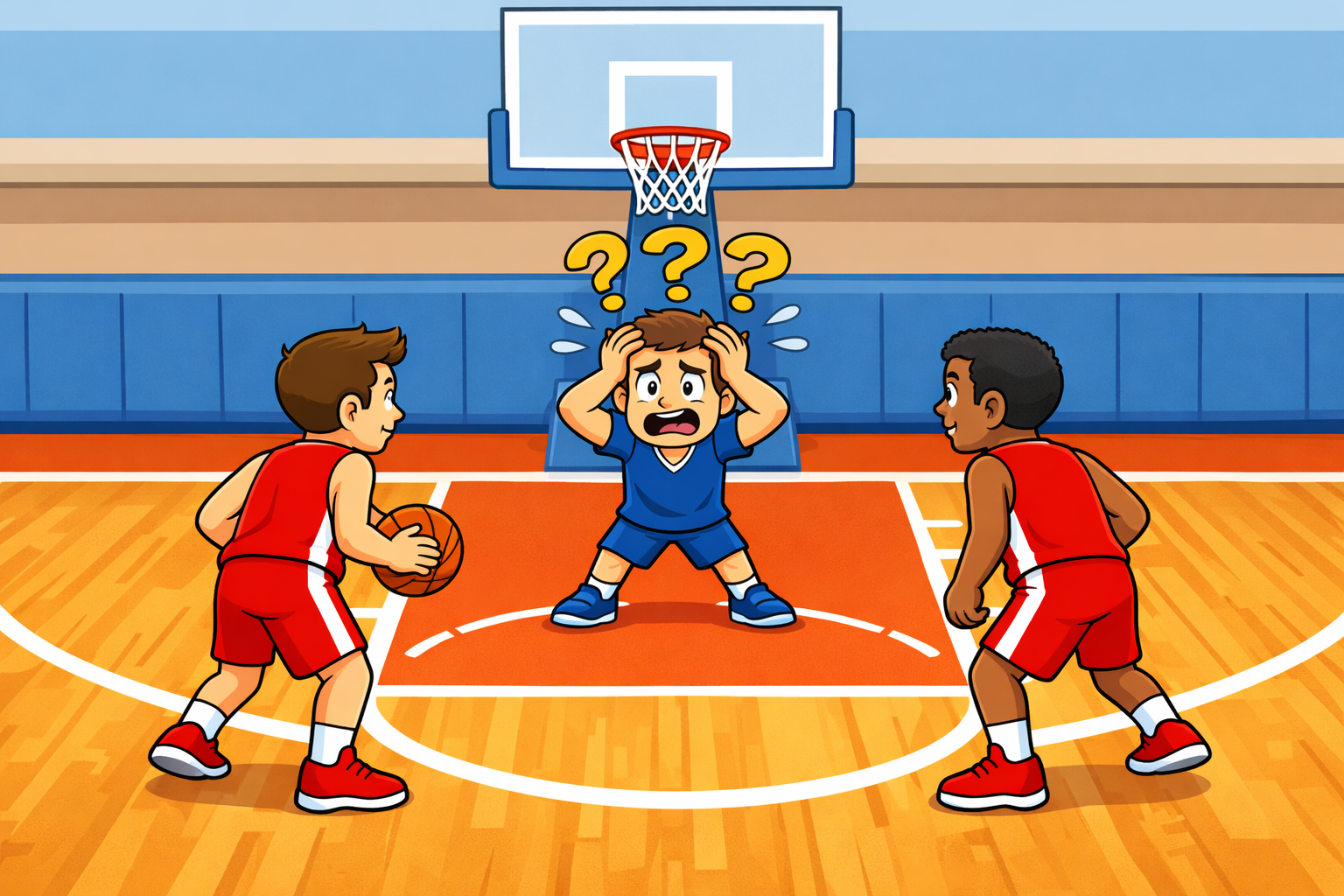
Defences are taught to protect the basket first.
So when you are past your defender and attacking the rim, a teammate has to help — or the defence will give up a layup.
The moment help comes, two defenders are guarding you. You have turned a small advantage into a big advantage.
When a second defender helps:
- you already beat your defender
- now another defender has left their man
That means someone else is open.
This is not a mistake by the defence.
You forced them into a situation where they had no good options.
4. Take what the defence gives you
Once you have a big advantage, the defence must make a choice.
There are only two options:
- If no one helps, score. You beat your defender. Take the easy basket.
- If help comes, don't force it. Someone else is now open. Find them.
Forcing a shot when help arrives helps the defence.
Passing to the open player keeps the advantage.
Help defence usually comes from predictable places. Teams are trained to help from the weakside, protect the paint first, and rotate from the same spots over and over. That means you don't need to guess. As you attack, look for: Who is most likely to help? Who will be left open when they do? Help doesn't come — finish. Help comes — pass.
5. The domino effect — keeping the advantage going
When help comes, you pass the ball to an open teammate.
Now the advantage has moved.
It is no longer your job to score.
It is now their job.
When your teammate catches the ball, they have two options:
- If the shot is easy, take it. The advantage already did its job.
- If the defence recovers, keep the advantage going. Do not hold the ball.
Defences usually recover by closing out — a defender sprinting toward the shooter.
To keep the advantage going, the next player must:
- attack the closeout
- get past their defender
- go toward the basket with intent to score
If they get past their man, the defence is tested again.
Now the defence must:
- give up a layup
- or send help
The process starts over.
While this is happening, players without the ball must help the advantage continue.
Their job is to:
- stay spaced
- move if their defender helps
- avoid crowding the ball
Spacing gives the next attacker room.
Cutting can help if a defender fully commits to help.
Good off-ball spacing makes the next decision easy.
One advantage knocks down the next. Drive → help → pass. Closeout → drive → help → pass. Each player either finishes the advantage or passes it to the next teammate. When everyone understands their role, the defence keeps chasing — and eventually breaks.