HOW FLARES CREATE ADVANTAGES
Flare screens create advantages by forcing an off-ball defender into a difficult decision.
The advantage comes from the screen itself — not from help at the ball.
1. A defender must stay connected
Before the flare happens, the defender guarding the shooter has one job:
- stay attached
- deny an easy catch
- be ready to close out
They are responsible for one player.
That responsibility creates pressure.
2. The screen creates the decision
A teammate sets a flare screen:
- on the defender
- in the path the defender must take to stay connected
Now the defender must choose:
- chase over the screen and risk being late
- go under and give up space
- switch and create confusion or a mismatch
No option takes everything away.
That's the advantage.
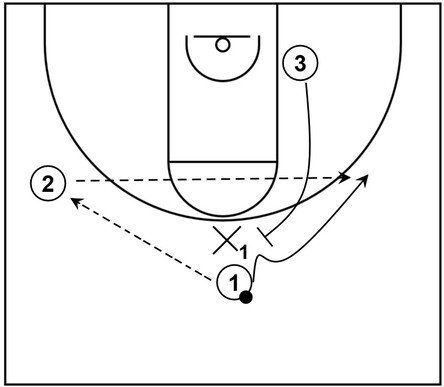
3. The shooter reads and reacts
The shooter:
- reads how the defender handles the screen
- moves with timing, not speed
- creates separation
Depending on the defender's choice, this leads to:
- a clean catch-and-shoot
- a late or reckless closeout to attack
- or a switch to exploit
Each outcome puts the offence ahead.
The flare screen doesn't rely on a mistake.
It works because a defender is asked to:
- guard space
- navigate a screen
- and make a decision
At the same time.
As you watch, notice that:
- flares are set to force an off-ball defender to make a decision
- the screen is placed in the defender's path to the shooter
- the shooter moves with timing, not speed
- the defence must choose how to guard the screen
Also notice:
- if the defender chases, the shooter gets separation
- if the defender goes under or hesitates, the shot is open
- if the defender switches, a mismatch or confusion appears
The offence is creating decisions, not waiting for mistakes.
Flare screens don't only create shots for the shooter. They also create easy baskets for the screener. When the defender overplays the shooter, jumps the screen, or turns their body to chase — the screener can slip the screen or roll hard to the basket. This often leads to layups, dunks, or passes right at the rim. Just like in pick and roll, the screen forces a decision. And when the defence is scrambling, the screener is often forgotten.
A flare screen and a pick and roll are doing the same thing.
They just start in different places.
Pick and roll — the ball handler uses a screen, the defender must choose, help or stay home, something is left open.
Flare screen — the shooter uses a screen, the defender must choose, chase or switch, something is left open.
The key difference:
- Pick and roll happens with the ball
- Flare screens happen without the ball
The advantage logic is identical. A defender is put at a disadvantage. They must make a choice. And every choice gives something up.
You don't need the ball to create an advantage. If the defence helps — move, screen, create separation. Screens force defenders to choose. Choices create advantages. Advantages create easy shots. That is the purpose of offence.